Ahom Traditional Attire
Code : P14175
INR
 7875 /
 Set MRP : 11318 30% Off Excluding Taxes & Duties Net Weight : 0.750 Kg
Description :
The Golden Legacy of the Swargadeos: A Masterpiece of Ahom Royal Heritage and the Radiant Soul of Assam
Origin and Roots
The roots of this attire are deeply embedded in the migration of the Tai-Ahom people, who entered the Brahmaputra Valley in the 13th century from present-day Yunnan and Myanmar. They brought with them advanced sericulture techniques and a unique weaving culture that merged with existing local practices. The roots of the specific designs seen today—such as the structured drape and the heavy use of silk—stem from a blend of Southeast Asian tribal aesthetics and the indigenous craftsmanship of the valley. This fusion created a distinct sartorial identity that separated the Ahom nobility from neighbouring regions, establishing a foundation for what is now known as the classic Assamese silhouette.
History
Historically, the Ahom traditional dress served as a visual marker of social hierarchy during the 600-year reign of the Ahom Dynasty. Muga silk, which forms the base of this dress, was the exclusive Royal Silk of the Swargadeos (Kings). Historical records and oral traditions suggest that the royalty maintained their own looms within the palace, where weavers created intricate designs like the Kingkhap (an aristocratic lion motif) specifically for the nobility. Over centuries, the dress evolved from a strictly royal garment to one adopted by the masses, especially as the Ahom rulers integrated with the local Assamese population and promoted the silk industry as a pillar of the states economy.
Traditional Significance
Traditionally, each component of the dress—the Mekhela, the Chadar, and the Riha—carries specific functional and social weight. The Riha, in particular, holds immense traditional value as it was historically the primary upper garment for Ahom women before the modern blouse became common. Even today, the traditional way of wearing the Riha signifies respect and maturity. The traditional use of natural dyes and hand-spun silk underscores a legacy of self-sufficiency, where every household was expected to have a loom (taat-xaal). This tradition ensured that the art of weaving was passed down from mother to daughter as a mandatory skill for womanhood.
Cultural Significance
The cultural significance of this attire is most visible during Bihu, the national festival of Assam. When a woman wears the Muga Mekhela Chador, she is not just dressing up; she is embodying the spirit of the land. The golden colour of the silk represents the ripening paddy fields, while the red embroidery symbolizes the fertility of the earth and the vigour of youth. In Assamese literature and folk songs (Bihu Naam), the beauty of a woman is often compared to the luster of her Muga dress, making it a central theme in the regions artistic and romantic expression. It is a symbol of dignity (Man-Maryada) that commands respect in every social gathering.
The Complete Ahom Traditional Female Ensemble
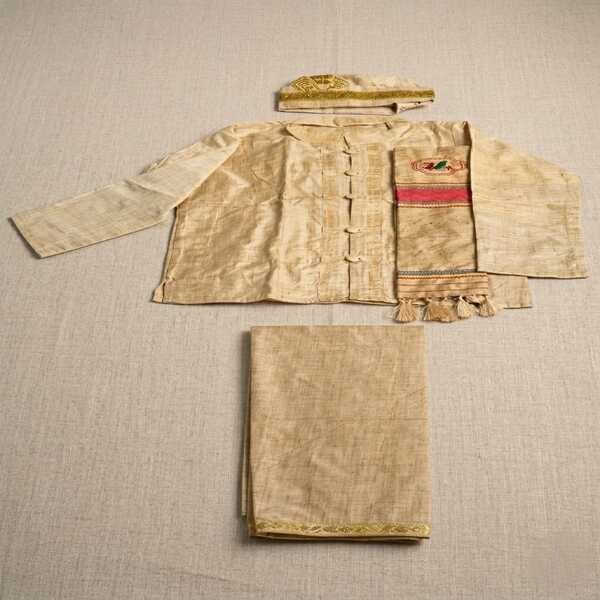
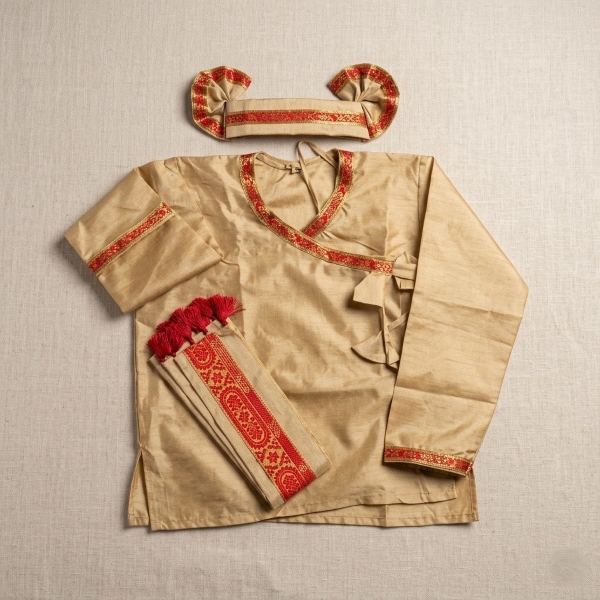
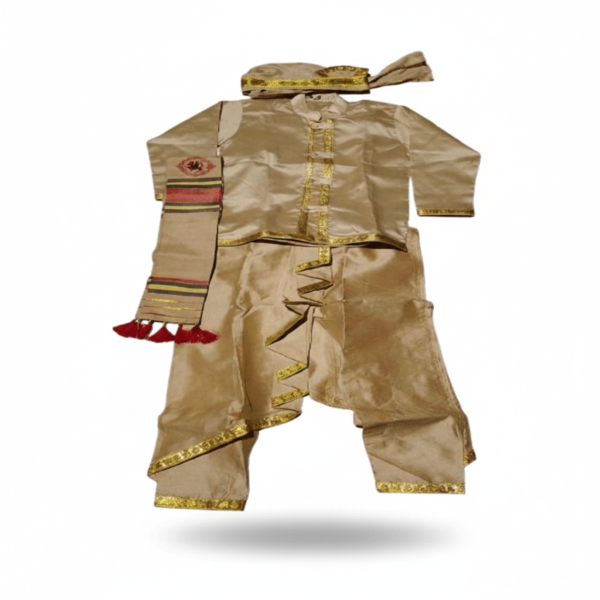
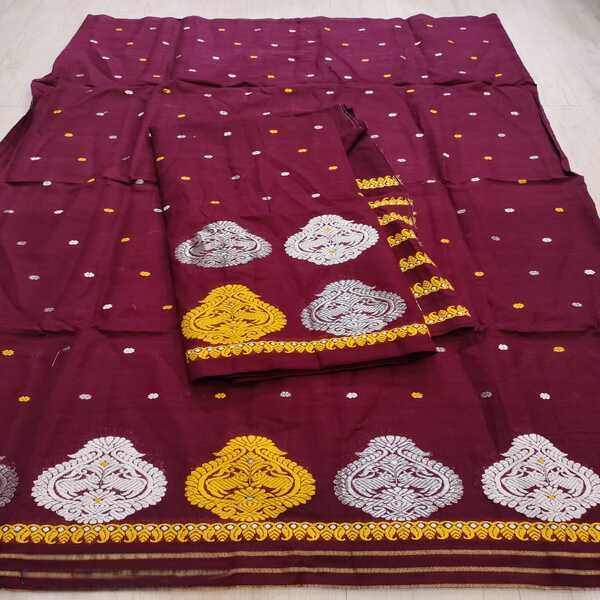
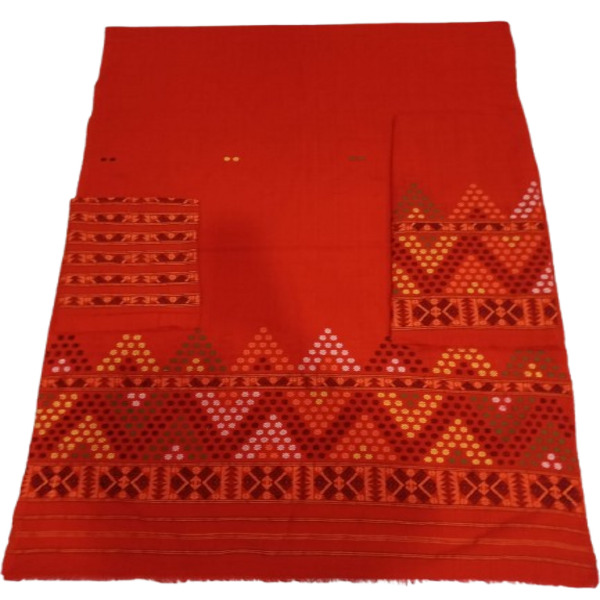
This complete set consists of the Mekhela (a pleated wrap-around skirt), the Chadar (a long shawl draped over the shoulder), and the Riha (a traditional narrow chest-wrap). It also includes a matching blouse and ornamental waistbands or scarves, all crafted from golden silk and adorned with red traditional motifs.
Importance
Today, the importance of the Ahom traditional dress extends beyond aesthetics into the realms of economy and global heritage. As a Geographical Indication (GI) protected product, Muga silk represents a vital source of livelihood for thousands of weavers in Assam. Its importance lies in its status as a living museum of textile technology; the methods used to rear the silkworms and weave the fabric have remained largely unchanged for centuries. By continuing to wear this attire for weddings, religious ceremonies, and public events, the community ensures the survival of an ancient craft against the tide of industrial mass production, preserving a tangible piece of human history.
More than just a garment, this Ahom traditional dress is a sacred thread of identity that binds the grandeur of an ancient empire to the vibrant, living pulse of modern-day Assam. Seller Status : Location : Assam, India
Specification :
| Country Of Origin |
: |
Proudly India, specifically the state of Assam. This is the only region in the world where the Muga silkworm (Antheraea assamensis) thrives. | | Cultural Significance |
: |
This attire is the definitive symbol of Assamese identity. It is the traditional costume for Bihu dancers and is considered a mandatory heirloom for significant life events, representing the Golden Fiber that defines the states pride. | | Traditional Significance |
: |
Historically reserved for Ahom Royalty (Swargadeos), the dress signifies social status and maturity. The inclusion of the Riha specifically marks traditional rites of passage and deep respect for ancestral Ahom customs. | | Durability |
: |
Known as the strongest natural fiber, Muga silk is incredibly long-lasting. It is famous for its unique property where its lustre increases with every wash, often outliving the original wearer to be passed down through generations. | | Embroidery Name |
: |
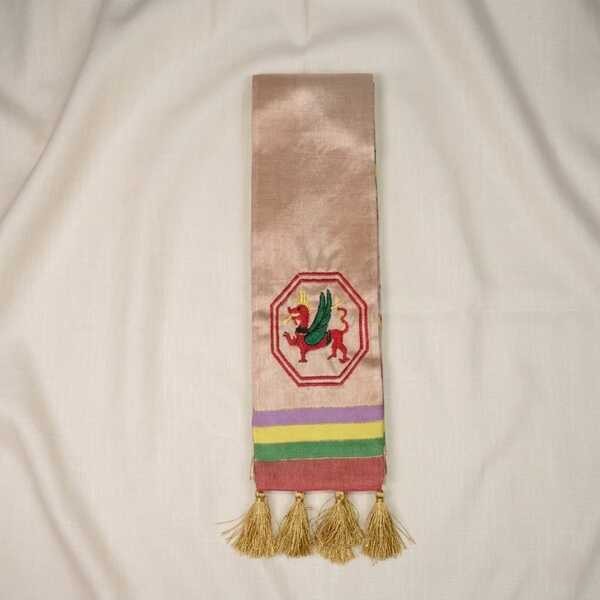
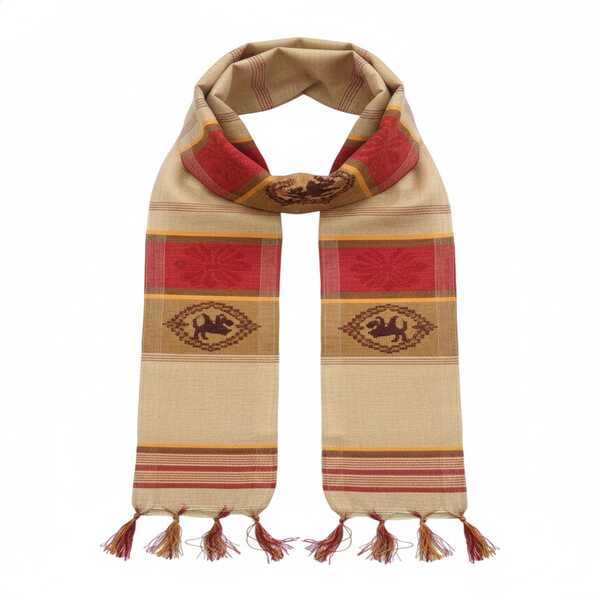
The primary royal motif is the Kingkhap, featuring two lions facing each other. Other traditional patterns include the Miri Gos (tree motifs) and Phul (floral designs), typically hand-woven using red cotton or gold zari threads. | | Fabric Composition |
: |
Made from 100% Pure Muga Silk, a natural wild silk. | | Set Type |
: |
The complete Ahom Traditional Dress set, locally known as the Muga-Riha-Mekhela, consists of the following specific items:
Mekhela (The lower wrap/skirt)
Chadar (The upper drape/shawl)
Riha (The traditional chest-wrap)
Blouse (The matching top)
Hasoti (The ornamental waistband/belt) | | Speciality |
: |
The primary specialty of the Ahom traditional dress lies in its use of Pure Muga Silk, a rare, organic Golden Fiber that is found exclusively in Assam. Unlike other silks, Muga is naturally gifted with a rich, shimmering golden-yellow tint that requires no chemical dyes, making it one of the most eco-friendly and sought-after fabrics in the world.
Beyond the material, its specialty is defined by:
Self-Glistening Property: It is the only silk in the world whose luster and glow increase with every wash, ensuring the garment looks more radiant over decades of use.
Royal Heritage Design: The inclusion of the Kingkhap motif (the royal lion) and the Riha (the sacred chest wrap) distinguishes this specific Ahom ensemble from standard Mekhela Chadors, marking it as a garment of high cultural and historical prestige.
Climate Adaptability: The fabric has a unique cellular structure that keeps the wearer cool in the summer and warm in the winter, making it a versatile masterpiece of traditional textile engineering. | | Uses |
: |
The Ahom traditional dress serves as more than just a garment; it is a versatile symbol of heritage used across various social and religious contexts in Assam:
Bihu Celebrations: It is the essential attire for women during the Rongali Bihu festival, particularly for Bihu dancers who wear Muga silk to symbolize the golden harvest and the vitality of spring.
Weddings and Rites of Passage: As the pinnacle of Assamese fashion, it is the preferred bridal trousseau. The inclusion of the Riha specifically marks a womans maturity and respect for ancestral customs during formal ceremonies.
Religious Offerings: Due to the purity of the natural silk, it is frequently worn during Prarthana (prayers) or when visiting the Namghar (community prayer house) to show reverence.
Cultural Representation: It serves as a National Dress on global platforms, used by dignitaries and performers to represent Assamese identity and the states rich handloom history.
Family Heirlooms: Because of its extreme durability, a high-quality set is often kept as a sacred heirloom, passed down from mothers to daughters as a tangible link to their family lineage and Ahom roots. | | Care Instruction |
: |
To maintain the pristine condition and natural gold luster of your Ahom traditional dress, follow these specific care instructions:
Initial Wash: It is highly recommended to dry clean the set for the first time, especially if it features heavy red embroidery or gold Guna (zari) work, to ensure the threads are set.
Hand Washing: For subsequent cleans, hand wash only in cold water using a very mild detergent or a gentle baby shampoo. Avoid harsh chemical detergents which can strip the natural oils from the Muga silk.
No Soaking: Do not leave the garment soaking in water for extended periods; a quick, gentle dip and rinse is sufficient to remove dust and perspiration.
Drying: Never wring or twist the fabric. Instead, roll it in a clean towel to absorb excess moisture and air dry in the shade. Direct sunlight can cause the natural golden hue to fade over time.
Ironing: Iron on the reverse side while the fabric is slightly damp using a low-to-medium silk setting. Always use a pressing cloth between the iron and the embroidery to prevent snagging.
Storage: Store the set in a cool, dry place wrapped in a clean white cotton cloth or muslin bag. Avoid plastic covers, as the natural silk fibres need to breathe to prevent yellowing or brittleness.
Refolding: Periodically take the garment out and change the fold lines every few months to prevent the silk from cracking or becoming permanently creased at the edges. |
About Seller :
The Seller is located from "Assam, INDIA " and specialized in HANDLOOMS & HANDCRAFTED.
|

.jpg "Click To Zoom")

.jpg)
.png)
.jpg)
.jpg)
.png)

.jpg)
.png)
.png)
.png)
.jpg)
.jpg)
.png)




.jpg)





.jpeg)